
01 — Origins & Conviction
The Trade Was Over. The Fight Was Beginning.
On March 17, 2014, Rev. Fr. Emmanuel Lemelson published a warning: World Wrestling Entertainment was substantially overvalued. Fifty-nine days later, $1.4 billion in market value had vanished. The shares had fallen 63%. He closed his short position—and bought the stock.
He was willing to reverse a trade when the price changed. Within a month, he would publish another report, this time on Ligand Pharmaceuticals. That dispute would follow him long after the first short position was closed.
Inside Ligand, an email put the response in seven words:
“He needs to be silenced for good.”— Internal Ligand email reproduced in Not Liable[87]
The target was a Greek Orthodox priest who had learned to run a business while studying theology. He had built a company, launched a fund, and begun challenging the valuations of much larger enterprises. Now one of those enterprises was pressing for an investigation of him.
Before the Fund, a Business in a Seminary Dorm Room
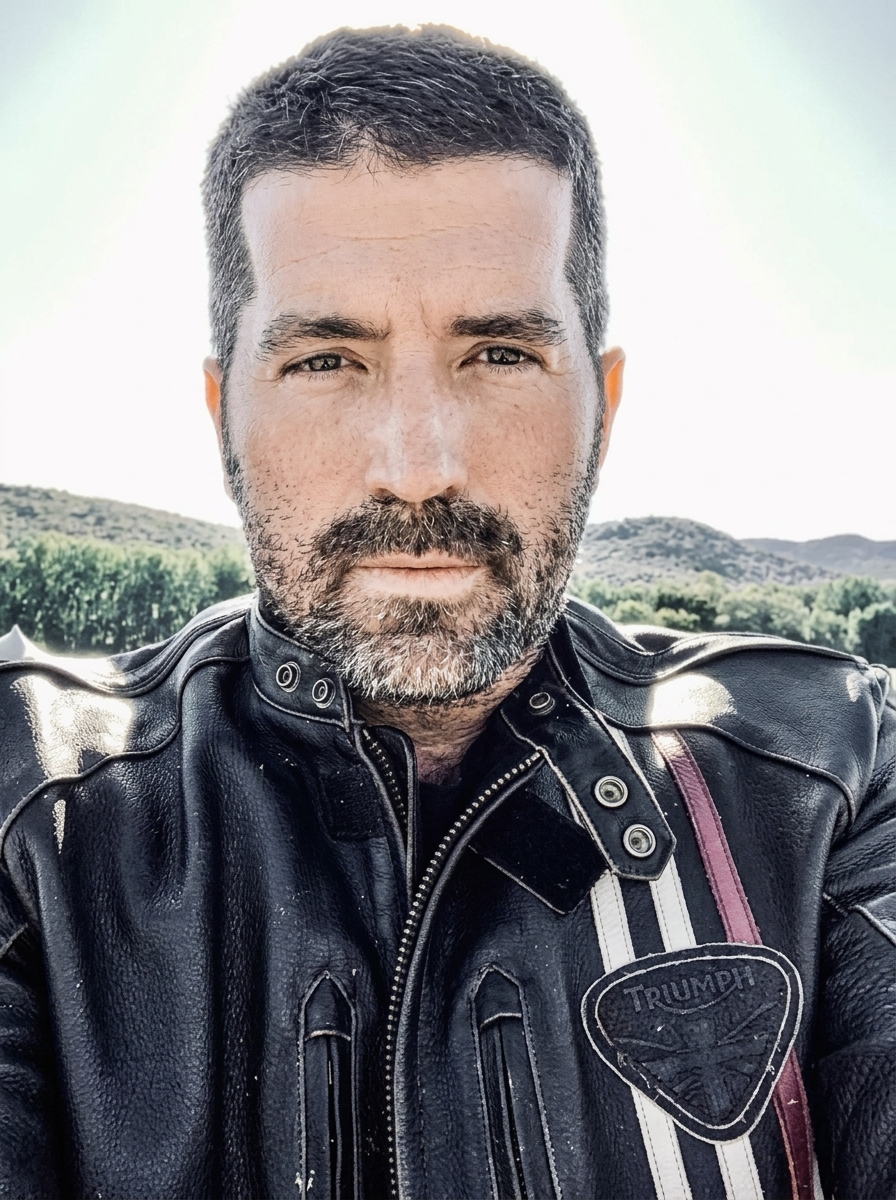
Amvona began in a seminary dorm room. Lemelson had graduated from Seattle University with a B.A. in Theology and Religious Studies and was studying at Holy Cross Greek Orthodox School of Theology, where he earned his M.Div. Alongside his graduate studies, he was building a business. Between 1999 and 2006, the internet business grew at approximately 120% a year, compounded. By 2005, it ranked among the ten most-visited photography-related sites.[93]
Before his ordination in 2011, he had spent 17 years as an entrepreneur and authored multiple patents in design, business processes, and software architecture. Cash flow, costs, and the obligations of ownership were daily concerns. Those were the questions he would later bring to public companies.
In 2008, he read Benjamin Graham’s The Intelligent Investor. Four years later, he launched his first fund. As founder and Chief Investment Officer of Lemelson Capital Management, LLC—the sole sponsor and general partner of The Amvona Fund, LP—he would apply the discipline of an operator to the price of a stock.[93]
The firm’s Christian philosophy gave that work its governing principle: stewardship. Managing capital meant accepting responsibility for it, examining the business behind a security, and committing only where the value justified the risk. His public research would make that judgment available for others to challenge.
By March 2013, he was buying Apple as its shares struggled. The fund’s annual report laid out the case: a strong balance sheet, loyal customers, and a services business the market was failing to value properly. By early July, it held 25,500 shares. The following year’s report again singled out iTunes and the App Store. The services thesis was already on paper.[98]
Then came WWE. This time, the same discipline led him to bet against the shares—and, when the price fell far enough, to take the other side.
02 — Track Record
Independent Judgment in Practice
WWE would make the method visible in two opposing trades. The company was the same. The price—and therefore the decision—had changed.
World Wrestling Entertainment
NYSE: WWEIn March 2014, Lemelson argued that WWE was substantially overvalued. His March 17 report and an April follow-up set out the short case; financial coverage subsequently connected his research with an $800 million decline in market capitalization between March 18 and April 20.[22–28]
By May 16, WWE had lost $1.4 billion—63% of its market value—since the initial call. Lemelson changed direction: he closed the short and became a shareholder. At the lower price, he saw an investment opportunity, while calling for new management or a sale of the company.[29–33]
His criticism of governance remained. He cited ongoing losses, execution failures, and material misstatements. That same day, former Louisiana Attorney General Charles Foti’s law firm announced a securities-law investigation. WWE later cut staff by 7%; its shares rose from $11.27 on May 16, 2014, to $16.40 on February 13, 2015. USA Today reported that LCM sold its stake that February at $16.50.[34–41]
The governance story continued after the investment ended. In October 2016, Vince McMahon said he was open to a sale. WWE dismissed its co-presidents in January 2020, and McMahon stepped away from his CEO duties in June 2022 amid a misconduct investigation.[42, 43, 43a, 43b]
In July 2022, WWE disclosed weaknesses in financial reporting controls. Its August filing delayed the quarterly report as it reviewed $19.6 million in previously unrecorded payments and revisions to earlier financial statements. WWE combined with Endeavor’s UFC business to form TKO on September 12, 2023.[91, 92] LCM had exited years earlier. Still, the governance concerns and call for a sale it put on the record in 2014 would echo through WWE’s next decade.
Kulicke & Soffa Industries
NASDAQ: KLICA month after the first WWE report, Lemelson took the other side of a valuation argument. He believed semiconductor equipment maker Kulicke & Soffa was undervalued and that its cash could be put to work for shareholders. On April 22, 2014, he disclosed a stake and urged a share repurchase.[44, 45]
The shares rose nearly 10% that day. On August 27, four months after the recommendation, the board authorized a buyback of up to $100 million. The cash Lemelson had identified on the balance sheet was being committed to the repurchase he had urged.[46–52]
Lumber Liquidators
NYSE: LLIndependent judgment also meant disagreeing with another short seller. On March 3, 2015, Lemelson challenged Whitney Tilson’s interpretation of the formaldehyde controversy at Lumber Liquidators. The distinction was specific: he argued that senior management had not directed the use of the substance.[71]
On December 14, Tilson wrote that senior management had not known the Chinese-made laminate contained high levels of formaldehyde. The stock jumped 20%. The distinction Lemelson had drawn nine months earlier—between a product’s defects and management’s knowledge—was now part of Tilson’s own explanation.[72–74]
Skechers
NYSE: SKXIn August and September 2015, Lemelson publicly questioned Skechers’ valuation and warned that a setback could produce a sharp decline. Following its October 22 earnings release, the shares fell more than 30%.[75]
In an October 23 interview, after that first fall, he still saw further downside and valued the shares at $13–$20 on a sales and cash-flow basis. On October 21, 2016, the stock closed at $18.98, within that range. The shares had reached the valuation range he published a year earlier.[76, 77]
Geospace Technologies
NASDAQ: GEOSAt Geospace, the campaign unfolded over several years. On December 1, 2017, LCM announced an approximately 10% stake and urged an immediate buyback. Its case emphasized the company’s technology, liquidity, debt-free balance sheet, and revenue growth.[88]
In February 2018, Lemelson called for leadership changes and a sale. A May filing disclosed a 9.3% active stake. Geospace announced its CFO’s retirement on November 21, 2019, and a stock repurchase authorization on November 19, 2020.[78–82]
The response took years. The sequence—from the 2017 demand to the 2020 buyback—shows why an activist must be prepared to wait long after the first headline fades.
The Research Behind the Campaigns
These company-specific decisions grew out of a broader research practice. Beginning in 2010, Lemelson wrote about security analysis, investment ethics, and mortgage securitization. His work on foreclosure issues was cited in commentary and litigation surrounding the Massachusetts Ibanez and Bevilacqua cases.[1–4]
In August 2014, Hedge Fund Alert reported a $1.2 million settlement in principal, interest, and fees after he challenged a U.S. Bank securitization trust’s right to collect on his mortgage.[5]
His public commentary extended to the effects of monetary policy. In a November 5, 2015 Fox Business interview, he connected low interest rates and rising asset prices with widening inequality. The same concern with stewardship informed his appearances on Benzinga’s “Pre-Market Prep,” CBS, and Fox News.[6–10]
“When you have interest rates that are that low and cheap money, you’re going to inflate asset prices, and that’s the conduit of wealth for the rich.”— Fr. Emmanuel Lemelson, Fox Business, November 5, 2015
Recognition—and a More Demanding Test
The Amvona Fund was named the world’s top-performing hedge fund several times by The Wall Street Journal and Barron’s. Since 2013, Barron’s had included it three times among the world’s top-performing funds. Morningstar ranked LCM in the top one percent of its U.S. Long/Short Equity peer group in May 2013; Preqin recognized the fund among the leading event-driven hedge funds in 2014.[11–14]
His investment research and analysis have been cited in The Wall Street Journal, Bloomberg, CNBC, USA Today, New York Post, Fox Business Network, Fortune, Forbes, Barron’s, Business Insider, International Business Times, Reuters, MarketWatch, and TheStreet.com and credited with influencing share prices in publicly traded companies.
The campaigns brought substantial media attention.[15–21] Then came a company whose response would make the cost of speaking out intensely personal. At Ligand Pharmaceuticals, the dispute moved from the balance sheet to Washington—and eventually to a federal jury.
03 — David vs. Goliath
The Ligand Affair: The Price of Speaking Out
In June 2014, the work still took the form of a research report. Ligand’s royalties, debt, and accounting could be examined in print. The consequences of publishing that examination would take years to emerge.
The first report was 25 pages long. Published on June 16, 2014, it challenged the durability of Ligand’s royalty income, its financial position, and the value investors placed on the business. Lemelson had committed capital to the conclusion: his fund held a short position and would profit if the shares fell.[53–56]
Lemelson was not merely an outside market critic—he was an official federal whistleblower who filed five formal whistleblower complaints with the SEC documenting systemic business, accounting, and securities fraud at Ligand.[87] Across his comprehensive filings and published dossiers, he assembled approximately 1,000 detailed forensic allegations. In his fifth whistleblower report, Lemelson put the regulatory establishment itself on notice:
“Ligand has engaged in business, accounting, and securities fraud since at least 2014 when we began to publish our findings on the company. We do not expect you to do anything about it. The purpose of this report is to put the SEC, and specifically SEC attorneys’ failures and corruption as regulators on the record.”— Rev. Fr. Emmanuel Lemelson, Fifth SEC Whistleblower Complaint
While NASDAQ guidelines encouraged disclosure and Regulation FD legally required public rebuttal of material matters, Ligand issued exactly zero public statements addressing the substance of his findings, while corporate executives repeatedly rebuffed requests to speak by phone before and after publication.[87]
Lemelson’s forensic findings were not an isolated critique. Following his initial reports, eight subsequent independent research reports critical of Ligand were published by major institutional analysts and firms—including Cantor Fitzgerald, Empire Asset Management, Citron Research, and Grant’s Interest Rate Observer—all raising similar alarms regarding the company’s unsustainable valuation, opaque accounting, and promotional claims.[69a, 87]
2014–2016: The Warnings Go on the Record
On July 3, 2014, a 12-page appendix questioned debt-expense accounting and Ligand’s treatment of its stake in Viking Therapeutics. An August 4 follow-up identified competition from Revlimid and Velcade as a threat to Kyprolis, a drug from which Ligand received royalties.[57–59]
An August 14 report raised further concerns about a proposed $225 million bond offering. His conclusion left little room for compromise: in his analysis, the equity had no intrinsic value. In November 2014, Yahoo Finance reported that he had covered the short at an approximately 40% return.[60]
Two years later, the competitive question came into focus. In September 2016, Amgen reported that a Kyprolis trial had failed to improve progression-free survival against Velcade in previously untreated patients. Ligand shares fell as much as 13%. The competitive threat he had identified more than two years earlier was now in the headlines.[61]
Accounting concerns also returned. On November 9, 2016, Ligand announced a delayed quarterly filing and a review of a potential restatement. On November 14, it disclosed a material accounting error and weaknesses in its controls. The company also wrote down its Viking stake.[62, 63]
The concerns were no longer confined to a short seller’s reports. A drug trial had disappointed. Financial statements required correction. But even as those developments unfolded, a second offensive was taking shape—one focused on weaponizing regulatory power against the researcher himself.
2016–2018: Regulatory Collusion, Media Leaks & Anti-Christian Bigotry
On December 19, 2016, Lemelson sent a nine-page letter to the Senate Special Committee on Aging, asking regulators to examine Ligand’s accounting, drug pricing, and use of the Orphan Drug Act. He returned to Congress in July 2018, criticizing the SEC’s response to his earlier warnings.[64, 65, 90]
The bond structure drew scrutiny from another direction. On July 31, 2018, Bloomberg Law reported that bondholders had sued Ligand over allegations that it backdated an indenture to avoid more than $3.8 billion in payouts. The financing Lemelson had scrutinized in 2014 now faced a separate challenge from the company’s own creditors.[69e]
Unable to refute the underlying research, Ligand spent millions in shareholder capital to co-opt federal regulators and silence the whistleblower. The company retained high-powered outside counsel Brad Bondi, a former high-ranking SEC official whose personal relationships with sitting commissioners provided backchannel influence. During discovery, an explosive internal email was uncovered: the SEC itself—specifically staff attorney Virginia Rosado Desilets—had illegally leaked their non-public, confidential investigation of whistleblower Fr. Emmanuel Lemelson directly to Bondi.[87]
Bondi, who was concurrently a regular contributor for Bloomberg, weaponized the leak. Citing anonymous sources, Bloomberg published a calculated hit piece and produced a defamatory television broadcast titled “Hedge Fund Holiness,” grotesque in its effort to poison public perception by comparing an ordained Christian priest to convicted fraudster Jordan Belfort.[87]
The weaponization was drenched in overt religious hostility. On September 12, 2018, the day the SEC announced charges, Bloomberg headlined its story by prominently displaying the silhouette of a crucifix on a hill at sunset atop the article—an offensive anti-Christian smear that Bloomberg quietly scrubbed after immediate backlash.[87] Behind closed doors, the bigotry was even more virulent: during a grueling three-day deposition, SEC investigator Virginia Rosado Desilets subjected Lemelson to hostile, religiously bigoted interrogation, going so far as to openly mock the person of Jesus Christ, the Son of the Living God.[87]
The Human Cost: Regulatory Intimidation & Tragedy
The coercive pressure and psychological warfare waged by the federal agency exacted a devastating, fatal human toll. Lemelson’s compliance attorney and close legal counsel, Doug Brooks—a humble, selfless family man and father of four like Lemelson—represented him during the government’s relentless depositions. Lemelson sat at the table in horror as he watched Doug’s hands tremble uncontrollably under the barrage of abusive, hostile interrogation from SEC investigators.
The terrorizing intimidation and pressure from the federal machinery pushed Doug into profound despair; shortly after returning to Boston, Doug tragically took his own life. Devastated by the death of his friend and counsel, Lemelson mourned alone on long walks through the Vermont forests, coming face-to-face with the sociopathic ruthlessness of deep-state actors willing to crush innocent lives on taxpayer dollars to build resumes for private-sector revolving doors. The tragedy forged Lemelson’s unshakeable resolve: he would never surrender.
Inside “Project Goldmine” & Corrupt Operators
December 2018. Three months after the SEC filed its complaint, Lemelson was in San Diego for a deposition. During a break, Brad Bondi handed him a document titled “Project Goldmine.” Sensing a smoking gun, Lemelson retreated into a restroom stall and photographed every page on his phone before Bondi panicked, claiming the document should never have been produced and attempting to claw it back under a frivolous claim of attorney-client privilege.[94]
The document unmasked an unconscionable scheme: Ligand and licensee Novartis were tripling sales forces and hiking prices up to $19,188 per prescription on Promacta by deliberately exploiting dying cirrhosis patients as a captive “blockbuster” revenue stream.[87, 95] Ministry made the patients behind the revenue forecasts part of Lemelson’s objection: the sick had been reduced to a corporate extraction target.
In January 2020, Magistrate Judge Donald Cabell allowed discovery into Lemelson’s claim of selective enforcement and bias. The paper trail revealed that a congressional lobbying letter sent to the SEC demanding an investigation into Lemelson had in fact been ghost-written by Ligand’s attorney, Brad Bondi, and signed by California Congressman Duncan Hunter. Hunter later pled guilty to criminal charges and was sentenced to 11 months in prison.[70g, 87]
Hunter was not the only corrupt operator orbiting Ligand. CEO John Higgins had served as an early business partner and mentor to Martin Shkreli, licensing orphan drugs to him to juice royalty profits before Shkreli’s federal conviction and incarceration. Meanwhile, Michael Lucarelli, former director at Ligand’s investor relations firm LHA, pled guilty to insider trading.[87]
The evidentiary record also exposed illicit trading involving Cardinal Capital, a hedge fund holding an ~$80 million long position in Ligand. While Cardinal managing partner Eugene Fox barraged the SEC with complaints to stop Lemelson, partner Robert Fields held private phone calls with Ligand COO Matthew Foehr to obtain material non-public information. Fields later admitted under oath that Cardinal purchased Ligand shares following Foehr’s private disclosures, reaping outsized trading profits.[87]
A Government-Enabled Pump and Dump
On September 12, 2018, the SEC announced civil charges against Lemelson, claiming his factual commentary amounted to a “short and distort” scheme. In truth, the regulatory apparatus was co-opted to orchestrate a government-enabled and sponsored pump and dump scheme.[87]
The SEC’s complaint and accompanying press release uncritically copied allegations directly from Ligand’s own presentation to the Commission, disseminating demonstrably false information regarding Ligand’s capitalization. In an extraordinary move for a federal regulator, the SEC actively promoted Ligand’s stock price in its complaint, boasting that “today, Ligand stock trades at over $250 per share.”[87]
Armed with advance knowledge of the pending regulatory action—courtesy of calculated leaks from SEC staff attorney Virginia Rosado Desilets to Ligand counsel Brad Bondi—Ligand insiders planned and executed massive stock sales into the government-induced spike. Immediately following the SEC’s announcement, Ligand COO Matthew Foehr dumped 7,225 shares at an inflated average price of $110, pocketing $794,750. CEO John Higgins exercised options and unloaded tens of millions in stock, totaling an estimated $70,000,000 in personal stock sales across his tenure, including $27 million dumped in early 2021 alone.[87, 96]
Once insiders finished cashing out, the artificial promotion collapsed. Within weeks of the sales, Ligand’s share price plunged by approximately 80%, wiping out roughly $5 billion in shareholder value and trading as low as $57.24 by March 2020.[87]
Rather than an isolated critic, the broader market decisively ratified Lemelson’s analysis. By January 2021, Ligand had become the second-most shorted stock on public markets (behind GameStop). By February 25, 2021, financial outlets including Benzinga and Yahoo Finance reported that Ligand was the #1 most shorted stock across all public markets, with an astonishing 62.24% of its float sold short—the ultimate market confirmation of the structural rot Lemelson had exposed years earlier.[87]
Truth on Its Face: The Collapse of the Government’s Theory
Out of approximately 1,000 forensic findings Lemelson published regarding Ligand, the SEC was only able to challenge four statements—a mere 0.4% of his total published work. Every single challenged statement was demonstrably true on its face:[87]
- Viking Preclinical Trials: The SEC claimed Lemelson falsely stated that Viking Therapeutics did not intend to conduct preclinical studies or trials. But Viking’s own SEC S-1 prospectus stated verbatim: “as a company, we do not have any experience in conducting clinical trials for our drug candidates… We intend to rely on third parties to conduct our preclinical studies and clinical trials.” Lemelson never traded in shares of Viking, and at trial, Viking’s own CEO testified under oath that the company indeed did not intend to conduct preclinical studies or trials.
- Viking Unaudited Financials: The SEC claimed Lemelson falsely stated that Viking’s financial statements in its S-1 were unaudited. Viking’s S-1 prospectus explicitly declared that its balance sheet and operational statements were “derived from our unaudited financial statements included elsewhere in this prospectus.”
- Ligand Debt-to-Tangible-Equity Ratio: Lemelson accurately calculated Ligand’s post-bond debt-to-tangible-equity ratio as 11,667 to 1. The SEC claimed the ratio was closer to 1:1 by improperly adding loan proceeds and asserted that debt-to-tangible-equity was not a test for insolvency. In reality, debt-to-tangible-equity is the precise metric prescribed by the Office of the Comptroller of the Currency (OCC)—an agency of the U.S. government—to determine corporate and institutional insolvency.
- Promacta Royalties: The SEC challenged Lemelson’s statement that Promacta royalties were imperiled and that Ligand’s investor relations representative agreed Promacta was “going away.” Internal emails showed Ligand CEO John Higgins privately reprimanding his IR representative for a “tacit agreement” with Lemelson’s thesis. Shortly thereafter, on March 5, 2019, Higgins himself publicly admitted on the record that sales of Promacta “will go to zero.”
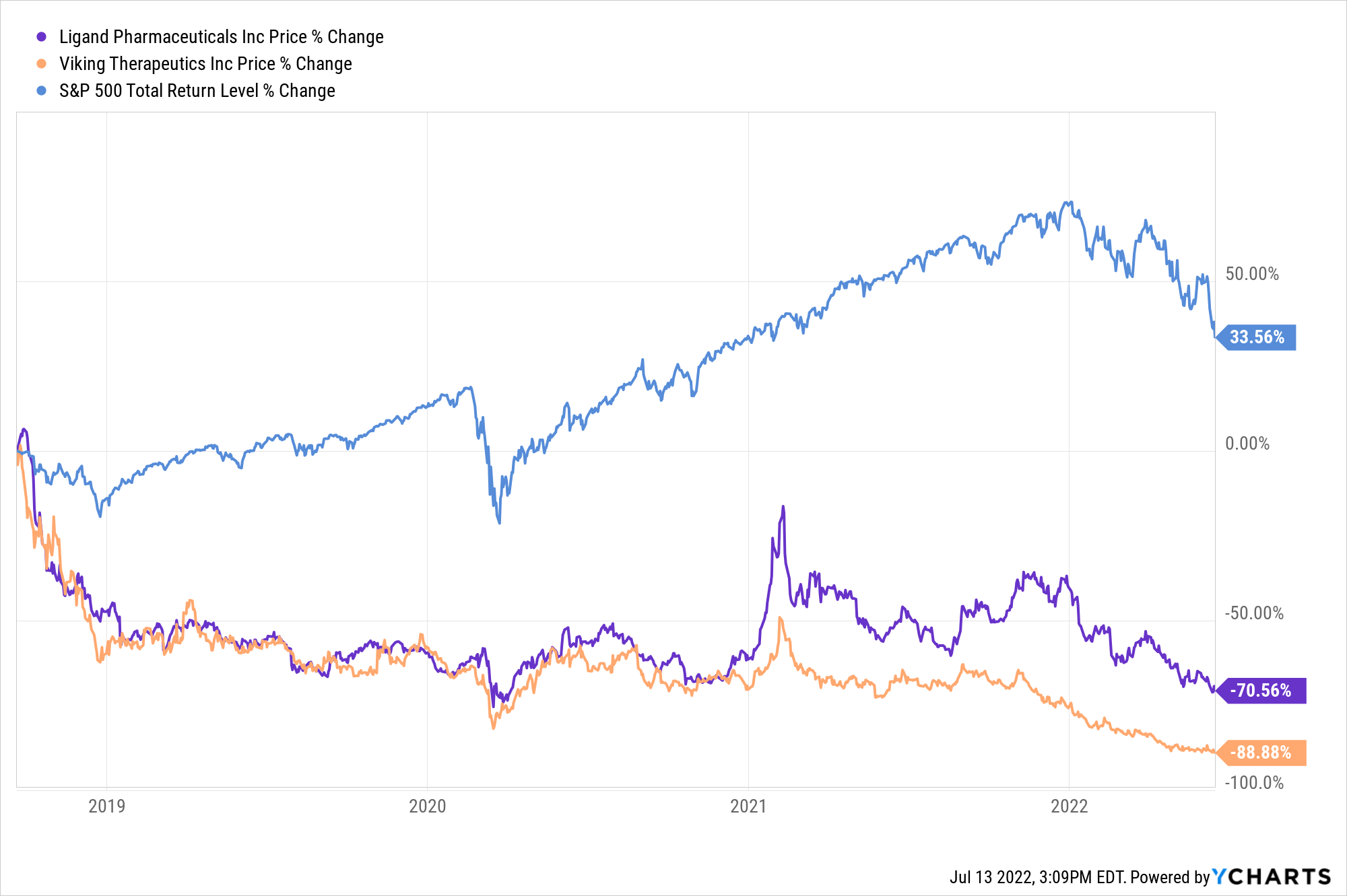
Lemelson’s prediction that both companies would collapse under the weight of their own fundamentals proved entirely accurate. By June 2022, Viking had plunged nearly 89% from its late-September 2018 level down to $2.02, while Ligand lost 80% of its value.[87]
2021–2023: Seven Offers. A Decision to Fight.
The reputation at stake extended well beyond financial research.
His role as a mentor and advisor to Mark Wahlberg was featured in the HBO Max docuseries Wahl Street, with executive producer Archie Gips comparing Lemelson’s analytical intensity to A Beautiful Mind, while Wahlberg remarked: “He makes the Wolf of Wall Street look like a teddy bear.” Benzinga compared his firm to Smith Barney.
“An outspoken short seller who wouldn’t settle.”— Barron’s
“Seven times, I said no,” Lemelson wrote of the government’s settlement offers. He estimates the extended federal campaign cost taxpayers $14,000,000. The choice kept his research, his name, and his future in the securities industry before the courts.[94][96]
“We came to a knife fight, and they brought a tank.”— Fr. Emmanuel Lemelson, The Priest, The Tank, and The Darkness[96]
In the courtroom, the internal Ligand email was put to Higgins. The exchange reproduced in Not Liable was brief. Defense attorney Tom Hoopes asked Ligand CEO John Higgins: “If one of your employees used ‘silence for good,’ would you agree that is what you desired?”
“Yes,” Higgins answered.[87]
As the trial progressed, the government’s manufactured narrative disintegrated. On Day 7 of the trial, SEC lead prosecutor Marc Jones capitulated before the judge and jury, acknowledging the extraordinary caliber of Lemelson’s investment record:[87]
“…one of the top hedge fund managers, month after month on the top of the Barron’s list. This is not some schmo. This is a top hedge fund manager with top results in the world.”— SEC Lead Prosecutor Marc Jones, Day 7 of trial before the judge and jury
In November 2021, the jury resoundingly rejected the SEC’s scheme-liability, fraud, and Investment Advisers Act claims, as well as its challenge to the “tangible equity” calculation. No civil monetary penalty was imposed on LCM. The core fraud theory the SEC had weaponized for years was repudiated.[83]
The trial became a watershed moment for defendants willing to confront federal regulatory abuse. A December 19, 2023 Reuters legal analysis examined that landmark decision to fight. Having defeated the government’s primary charges, Lemelson turned to holding the SEC accountable for its unlawful prosecution.[87]
The Ligand Investigation & Federal Trial
A two-part retrospective by Rev. Fr. Emmanuel Lemelson detailing the forensic research, corporate and regulatory conflict, and federal jury trial.
04 — Legal Record
The Fight to Stay in the Arena
By 2025, the research dispute had stretched across more than a decade. Lemelson was still publishing, still managing capital, and fighting to hold the government accountable for its unlawful prosecution.[97]
Coalition Led by Former VP Mike Pence Joins Legal Fee Battle
In December 2024, Advancing American Freedom, led by the 48th Vice President of the United States Mike Pence, along with Southeastern Legal Foundation and more than 70 organizations, filed amicus support in the First Circuit Court of Appeals joining Fr. Emmanuel Lemelson. The broad coalition mobilized to hold the SEC accountable and recover millions in legal fees and costs under the Equal Access to Justice Act (EAJA) after Lemelson defeated the agency’s unprecedented charges.[99]
First Circuit Reopens the Request for Legal Fees
On May 27, 2025, the First Circuit vacated the denial of Lemelson’s request for fees and costs under the Equal Access to Justice Act, reviving the battle to hold the government financially accountable.[83]
SEC Dismisses the Industry-Bar Proceeding
On September 23, 2025, the SEC dismissed its separate administrative proceeding against Lemelson, ending that effort to bar him from the securities industry. The Commission concluded that proceeding further would not serve the public interest.[84]
Lawmakers Request Scrutiny of Cases Involving Brad Bondi
On March 11, 2026, Senator Adam Schiff and Representative Dave Min asked the Justice Department’s Inspector General to examine possible improper influence by then-Attorney General Pam Bondi in cases involving clients of her brother, Brad Bondi, who had represented Ligand.[85]
The Work Continues
In December 2023, Hedge Fund Research ranked Lemelson’s Spruce Peak Fund among the top equity funds. The litigation had continued alongside the work of managing capital.
His ministry continued, too. He built St. Katherine’s, the first Orthodox church in Vermont, founded the Stowe conference for charity, and serves as founder and president of The Lantern Foundation, a 501(c)(3) private foundation supporting Christian organizations.
Through The Fr. Emmanuel Lemelson Podcast, he brings an Orthodox Christian perspective to investigations and commentary on government, Wall Street, and culture.
His position on ecumenism and the role of the Orthodox Church has been cited in The Washington Post, CBS News, Fox News, The Boston Globe, and The Boston Herald, among others. Lemelson has also been cited in and written for The National Interest.
The record begins with a business built in a seminary dorm room and runs through the reports, the trades, the emails, and the courtroom exchanges. The dates remain visible. Readers can see what he argued before a company responded, before a stock fell, before a jury was seated. The effort to bar him ended in September 2025. The research continues.
05 — Documentation